
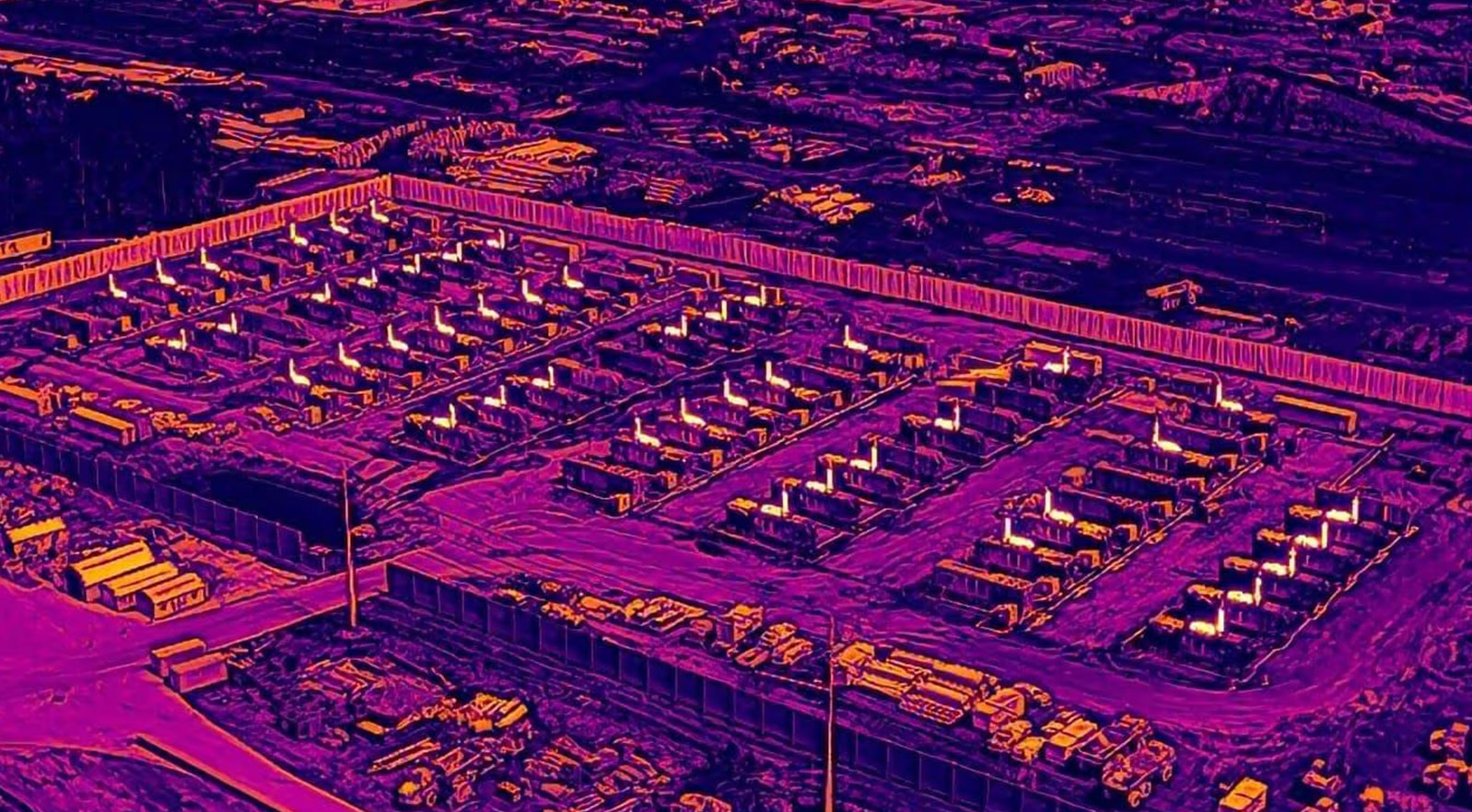
Data centers are N.J.’s next redevelopment fight. Atlantic City shows what’s at stake
New Jersey has seen this story before. Government officials promise that redevelopment will bring investment, jobs and renewed prosperity. Private property becomes part of a larger vision. And the people who own that property can find themselves standing in the way of a plan they had little role in shaping.
As New Jersey considers the rapid expansion of data centers, residents should be asking a familiar question: Whose interests are really being served when private development is promoted as a public benefit?
Lessons from Atlantic City
As a trial lawyer who represented Atlantic City homeowner Vera Coking in her fight against casino redevelopment plans involving Donald Trump, then a casino developer, and the Casino Reinvestment Development Authority, I know what is at stake when government power and private development interests intersect — the rich get richer, and the poor get poorer.
Casino development was promoted as a way to revitalize Atlantic City with jobs, tax revenue and economic opportunity. Its backers overpromised and underdelivered.
To developers and public officials, land may represent investment and revenue. To the people who own it, that same land can represent a lifetime of work, financial security, independence and family history.
The data center wave
New Jersey now faces another wave of development, driven by demand for data centers. These massive facilities power artificial intelligence, cloud computing and the digital services Americans increasingly depend on. Developers promise substantial investment, construction jobs and new tax revenue. But data centers also require large amounts of land and electricity, can strain water resources and may demand costly infrastructure improvements.
Residents deserve answers, through transparent planning and meaningful public input, to three questions:
- Who will pay for the infrastructure?
- How will utility customers and nearby neighborhoods be affected?
- Do the economic benefits justify the long-term costs?
New Jersey voters are already skeptical. A recent poll from Stockton University’s William J. Hughes Center for Public Policy found voters evenly divided on data center development nationally, with 40% supporting it and 40% opposing it. But opposition rises to 52% when voters consider development in New Jersey and to 65% when asked about a facility in their own town. Only 18% support data center construction in their community — making thoughtful planning even more essential.
The Urban Land Institute’s “Local Guidelines for Data Center Development” offers one practical framework. Clear zoning standards can help communities decide where data centers belong and set expectations for their impacts and infrastructure needs before projects move forward.
What the courts have said
In Township of Jackson v. Getzel Bee LLC, decided in July, the New Jersey Supreme Court unanimously rejected a municipality’s attempt to condemn privately owned properties and transfer them to a developer through a land exchange. The decision underscores that redevelopment ambitions do not excuse the government from respecting the legal limits on its power or treating property owners fairly.
Not every data center proposal involves eminent domain, and development can benefit communities. But when officials facilitate land acquisitions or contemplate condemnation for private projects, they must demonstrate a legitimate public purpose and respect property owners’ rights.
New Jersey can embrace technological innovation without repeating the mistakes of past redevelopment. That requires policymakers, communities and property owners to work together so economic growth does not come at the expense of individual rights.
I represented Vera Coking because I believed one property owner’s rights mattered, even when she faced powerful interests with enormous resources. That principle is no less important in the age of artificial intelligence and data centers.
Progress is not measured only in dollars invested, but also in the rights we refuse to sacrifice along the way.
Glenn Zeitz is a trial lawyer licensed in New Jersey and Pennsylvania and host of the “Philly Trial Lawyer Stories” podcast. He lives in South Carolina and owns a second home in Moorestown.
By Glenn Zeitz